





Enphase IQ8A Microinverter Solar Kit | 7.2–22.4kW Solar | Battery-Ready to 40kWh
Price range: $7,789.30 through $51,731.30
-
A solar kit built around Enphase IQ8A microinverters.
- 7.08–28.32 kW backup continuous 120/240V split-phase output
- Solar: 18 × 400W panels (7.2 kW DC), 26 × 400W panels (10.4 kW DC), 36 × 400W panels (14.4 kW DC), 44 × 400W panels (17.6 kW DC) or 56 × 400W panels (22.4 kW DC)
- Storage: battery-ready (no battery), 10 kWh (1 × 10 kWh Wall/Floor-Mount), 20 kWh (2 × 10 kWh Wall/Floor-Mount), 30 kWh (3 × 10 kWh Wall/Floor-Mount) or 40 kWh (4 × 10 kWh Wall/Floor-Mount) Enphase IQ Battery 10C
- Exports solar where your utility allows
Racking sold separately.
Enphase IQ8A Microinverter Solar Kit | 7.2–22.4kW Solar | Battery-Ready to 40kWh
This kit is built around Enphase IQ8A microinverters, delivering 7.08–28.32 kW backup of continuous 120/240V split-phase output, paired with 18 × 400W panels (7.2 kW DC), 26 × 400W panels (10.4 kW DC), 36 × 400W panels (14.4 kW DC), 44 × 400W panels (17.6 kW DC) or 56 × 400W panels (22.4 kW DC) and battery-ready (no battery), 10 kWh (1 × 10 kWh Wall/Floor-Mount), 20 kWh (2 × 10 kWh Wall/Floor-Mount), 30 kWh (3 × 10 kWh Wall/Floor-Mount) or 40 kWh (4 × 10 kWh Wall/Floor-Mount) of storage.
- 7.08–28.32 kW backup continuous AC output, 120/240V split-phase
- Solar array: 18 × 400W panels (7.2 kW DC), 26 × 400W panels (10.4 kW DC), 36 × 400W panels (14.4 kW DC), 44 × 400W panels (17.6 kW DC) or 56 × 400W panels (22.4 kW DC)
- Battery options: battery-ready (no battery), 10 kWh (1 × 10 kWh Wall/Floor-Mount), 20 kWh (2 × 10 kWh Wall/Floor-Mount), 30 kWh (3 × 10 kWh Wall/Floor-Mount) or 40 kWh (4 × 10 kWh Wall/Floor-Mount) (Enphase IQ Battery 10C)
- Exports solar where your utility allows
Choose Your Configuration
| Solar Array | 18 panels (7.2 kW DC), 26 panels (10.4 kW DC), 36 panels (14.4 kW DC), 44 panels (17.6 kW DC), 56 panels (22.4 kW DC), 400W each |
| Battery Storage | No Battery (Battery-Ready): solar now, storage later 10 kWh (1 × 10 kWh Wall/Floor-Mount) 20 kWh (2 × 10 kWh Wall/Floor-Mount) 30 kWh (3 × 10 kWh Wall/Floor-Mount) 40 kWh (4 × 10 kWh Wall/Floor-Mount) Rack-Mount batteries install in a battery rack or cabinet; Wall/Floor-Mount batteries mount on a wall or stand on the floor. |
Options are offered in specific combinations; available combinations are shown in the selector above.
Estimated Annual Solar Production
| Phoenix, Arizona | ~12,200 (18P) · ~17,700 (26P) · ~24,500 (36P) · ~29,900 (44P) · ~38,100 (56P) kWh/year |
| Chicago, Illinois | ~9,100 (18P) · ~13,100 (26P) · ~18,100 (36P) · ~22,200 (44P) · ~28,200 (56P) kWh/year |
Planning estimates for an unshaded, south-facing array at about 30° tilt with typical losses. Actual production varies with location, orientation, tilt, shading, weather and equipment. Use a site-specific model before purchase.
System Overview
The kit pairs the inverter with an array sized to refill the battery on an average day (3.5 peak sun hours) and a battery bank that can deliver the inverter’s full output. Without batteries, it operates as grid-interactive solar that offsets your utility use; with batteries, it powers the circuits connected to its backup output during an outage. With Enphase, every panel has its own microinverter; backup output depends on the number of IQ Batteries.
Ideal Applications
- Electric-bill reduction for homes using up to about 15,000 kWh per year
- Electric-bill reduction for homes using about 15,000–25,000 kWh per year
- Electric-bill reduction for homes using about 25,000–40,000 kWh per year
- Outage backup for the essentials: refrigerator, lights, internet and outlets
- Outage backup for the essentials plus one large appliance, such as central A/C or an electric water heater
- Whole-home backup for a typical home with one HVAC system (up to 200A service)
- Whole-home backup for larger homes with additional major loads
What’s Included
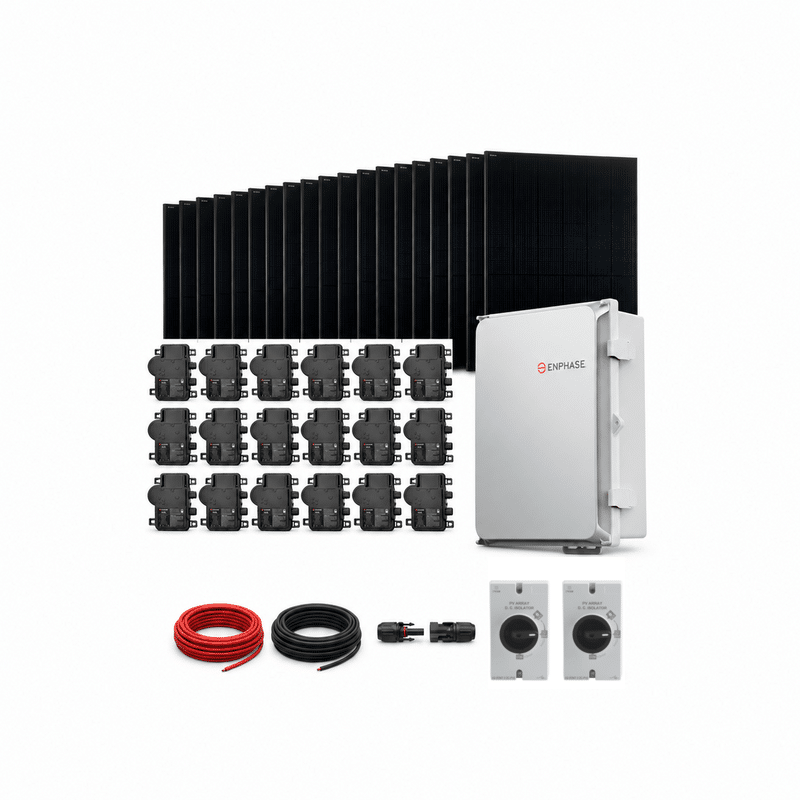
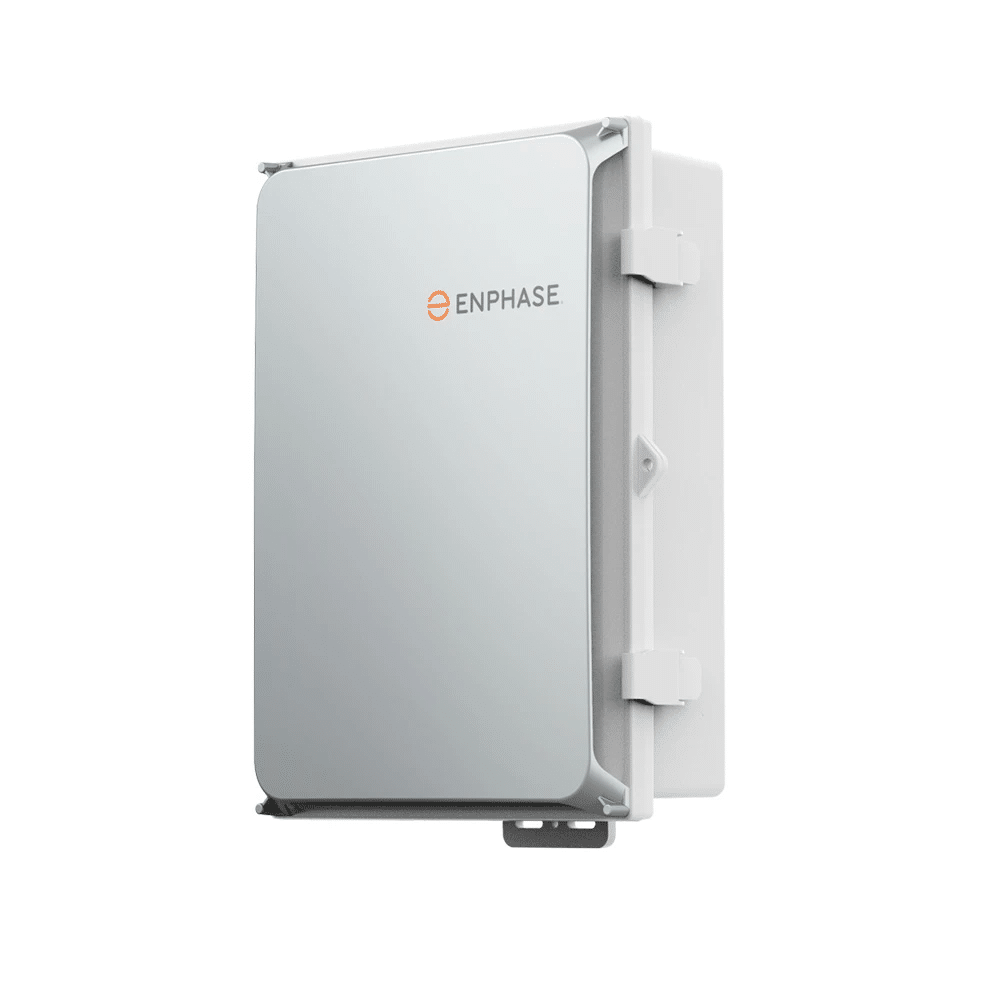
- Enphase IQ8A microinverters (one per panel) with Q Cable, IQ Combiner and accessories
- ALEX-400 400W solar panels (count per configuration)
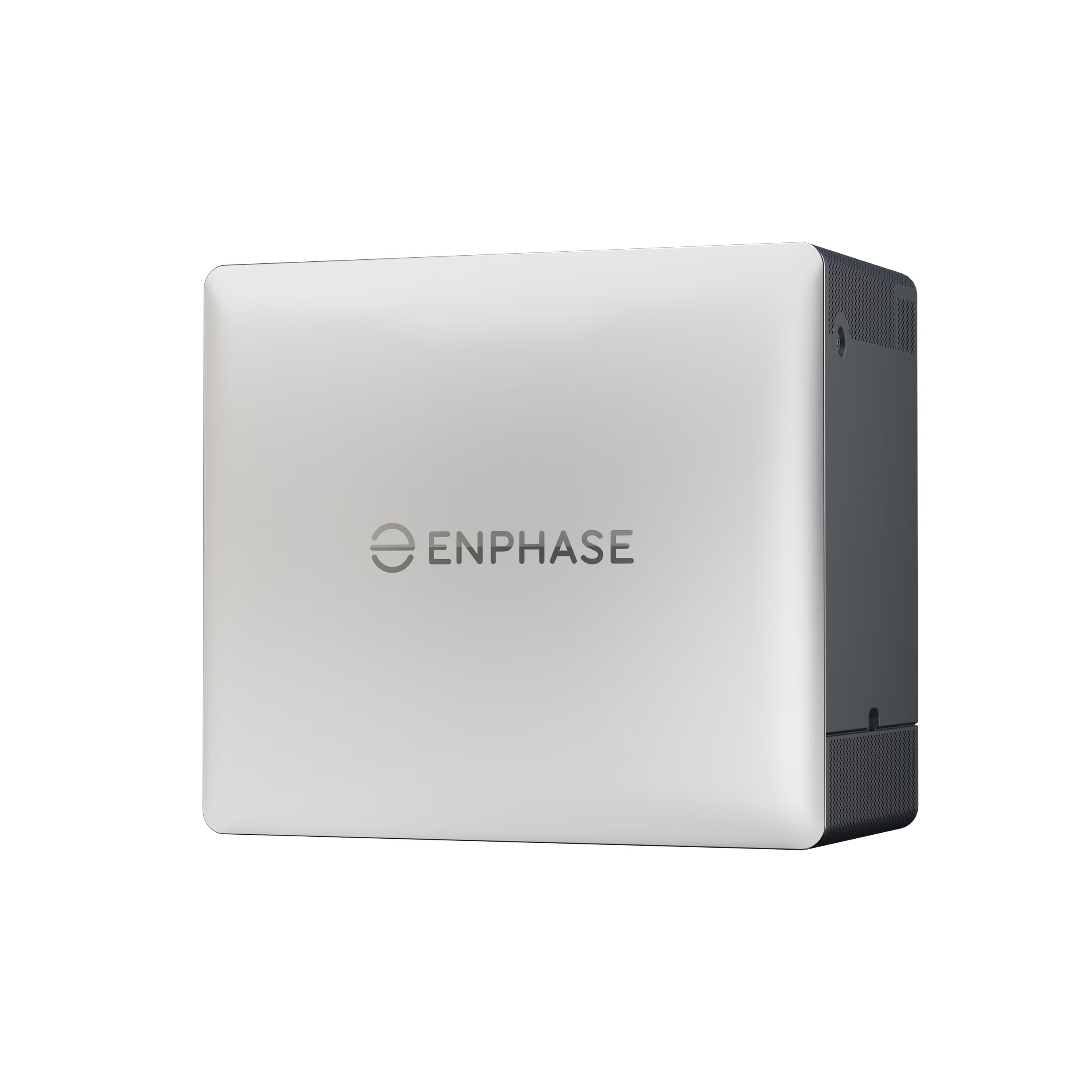
- Enphase IQ Battery 10C (battery configurations), with mounting and battery cabling
| Weight | N/A |
|---|---|
| Dimensions | 72 × 48 × 54 in |
| Brand | |
| Inverter Platform | Enphase IQ8A |
| Inverter Quantity | Single |
| Continuous Output | 6.28–28.32 kW |
| Inverter Size (KW) | 10KW-15KW, 15KW-20KW, 20KW–30kW, 5KW-10KW |
| Output (V) | 120V/240V |
| Grid Connection | Grid-Interactive Hybrid (Can Export) |
| Generator Compatible | No |
| Inverter Type | MicroInverter |
| Solar Capacity (DC) | 10KW–15kW, 15K–20KW, 20KW–30kW, 5KW-10KW |
| Battery Capacity (KWH) | 10KWH-20KWH, 20KWH–30KWH, 30KWH-40KWH, 40KWH-50KWH, No Battery |
| Rapid Shutdown | None |
| Solar Array | 18 Panels (7.2 kW), 26 Panels (10.4 kW), 36 Panels (14.4 kW), 44 Panels (17.6 kW), 56 Panels (22.4 kW) |
| Battery Storage | 10 kWh, 20 kWh, 30 kWh, 40 kWh, No Battery (Battery-Ready) |
What Can It Power?
Built around the Enphase IQ8A microinverters, panel-level microinverters with optional IQ Battery storage, this kit delivers 7.08–28.32 kW of continuous 120/240V split-phase output.
0.5–1.5 kW
Refrigerator and freezer, LED lights, ceiling fans, phone and laptop charging, modem, router and TV. These small and cycling loads are the starting point for long outage coverage.
1.5–5 kW each
Microwave, coffee maker, washer or dishwasher as needed. An electric water heater, dryer, oven or range can use a large share of the output, so stagger them instead of running them together.
Check starting current
A compatible mini-split, central HVAC, well pump or shop tool may run when its running demand and starting current fit within 28.32 kW continuous and 53.76 kW surge. Check the actual equipment; tonnage or horsepower alone doesn’t confirm it. A soft starter can help some compressors.
How Long Will It Run?
Battery size sets how much energy you have. These battery-only estimates use 80% of nominal storage delivered to loads (8 kWh from 10 kWh, 16 kWh from 20 kWh, 24 kWh from 30 kWh, 32 kWh from 40 kWh).
16.0 hrs
32.0 hrs
48.0 hrs
64.0 hrs
8.0 hrs
16.0 hrs
24.0 hrs
32.0 hrs
4.0 hrs
8.0 hrs
12.0 hrs
16.0 hrs
2.0 hrs
4.0 hrs
6.0 hrs
8.0 hrs
0.6 hrs
1.1 hrs
1.7 hrs
2.3 hrs
0.3 hrs
0.6 hrs
0.8 hrs
1.1 hrs
Runtime = usable battery energy ÷ average load, starting full, with no solar, grid or generator. Average load includes cycling: a 1 kW appliance running half the time averages about 0.5 kW. Actual results depend on settings, battery condition, temperature and system consumption.
Cooling, heating and electric water heating can change daily totals substantially.
What Does Solar Add?
Solar powers daytime loads and recharges the battery with what’s left.
Illustration: 3.5 peak sun hours × array rating × 80% system yield, rounded. Not a location-specific forecast. Household use draws from this energy too, so not all of it refills the battery. Shading, winter and cloudy days can sharply reduce production.
When Solar Isn’t Enough
Why This System?
The Enphase IQ8A Microinverter Solar Kit is built around the Enphase IQ8A microinverters, panel-level microinverters with optional IQ Battery storage. Match the configuration to your daily energy use, the loads that run together and your installation.
120/240V split-phase output runs common household circuits and compatible 240V equipment. Manage what runs together and check motor starts for HVAC, pumps or shop tools.
Each panel works independently, so shade on one panel doesn’t drag down the rest.
See every panel’s output in the Enphase app.
Add storage for backup and time-of-use savings.
The battery bank can deliver the inverter’s full output, the array is sized to recharge the battery, and strings are laid out within the inverter’s limits.
Choose Your Size
18 panels (7.2 kW), 26 panels (10.4 kW), 36 panels (14.4 kW), 44 panels (17.6 kW), 56 panels (22.4 kW)
Battery-ready, 10 kWh, 20 kWh, 30 kWh, 40 kWh
Only the combinations shown in the product selector are offered.
Reference: Enphase IQ8A microinverters manufacturer information.
Frequently Asked Questions
Contact SanTan Solar for help matching the system to your project.
Related products
-

-
-
Dual Anker SOLIX E10 Home Backup Solar Kit | 15.36kW 120/240V | 14.4kW Solar | 36.86kWh Battery
Price range: $27,606.00 through $29,850.64 -


Reviews
There are no reviews yet.